We earn a commission if you buy through our links, at no extra cost to you.
Best EV Charger for a Garage: Plug-In or Hardwired?
Picking a Level 2 charger for a garage or driveway: NEMA 14-50 plug-in vs hardwired, enclosure ratings, cable reach, the dryer outlet question and permits.
At a glance
For a garage, the Emporia EV Charger is a plug-in pick at 40 amps with a NEMA 4 case. The Leviton EV40P adds a NEMA 3R enclosure and Wi-Fi, while the Grizzl-E Classic 40A is the no-app option. Choose hardwired, like the ChargePoint Home Flex, for more amps.

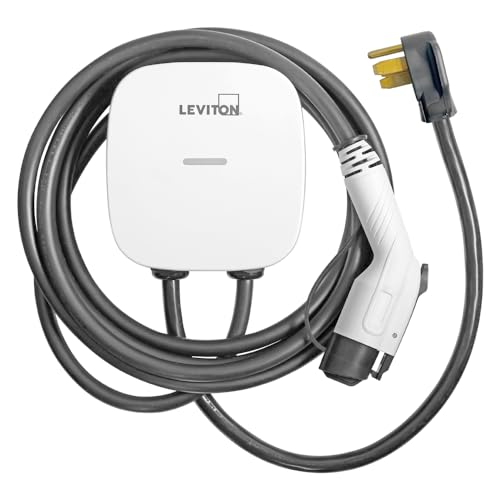

A garage looks like the easy place to charge an EV, and it usually is. The harder decisions are electrical: plug-in or hardwired, which outlet, which enclosure rating and how far the cable has to reach. This guide compares the makers’ published specs and government guidance on home charging, not our own use of the products, and it points out where only a licensed electrician can decide.
For all eight chargers, see our 2026 EV charger comparison.
Plug-In or Hardwired
Plug-in chargers connect through a NEMA 14-50 plug to a matching receptacle. Hardwired chargers connect directly to a dedicated circuit. The EPA says chargers rated at 48 amps or higher are usually required to be hardwired, and that using an outlet lets you swap chargers without calling an electrician every time. That is why the plug-in chargers here stop at 40 amps, the common plug-in class.
Both routes need a dedicated 240-volt circuit. The Department of Energy’s Alternative Fuels Data Center says EV charging is a continuous load under the National Electrical Code, with Article 625 covering most of the rules, and the makers’ manuals size the circuit at 125 percent of the charger’s load: a 40-amp charger calls for a 50-amp breaker, and a 48-amp charger for a 60-amp breaker. A new receptacle is still electrical work, and the receptacle needs to be built for continuous use. Emporia, for example, says the outlet must be industrial-grade and rated for continuous duty at 50 amps. A licensed electrician should install it, and in many places a permit and inspection come with the job. San Diego County says a Level 2 charger there needs a building permit, an inspection before use and a licensed contractor.
We do not give installation steps, and we cannot tell you which code edition your town enforces.
The Dryer Outlet Question
Many garages have a 240-volt dryer outlet, and people understandably ask whether it can feed a charger. The short answer is that we cannot say, and neither can a product page. The EPA says you might not need an electrician if you have an outlet you are confident was properly installed, but whether an existing circuit can serve a charger depends on its wiring, its breaker, the receptacle type and the other loads on it. That assessment belongs to a licensed electrician.
We do not recommend splitters or adapters that let a charger and an appliance share an outlet. Grizzl-E’s manual, for one, warns against using the charger with an extension cord or an electrical adapter. If the dryer circuit is not suitable, your electrician can add a dedicated circuit instead.
Enclosure Ratings and Weather
Garages are not always sheltered. An open carport, a detached garage with a drafty door or a driveway wall all expose a charger to weather. For a charger installed outside, the EPA suggests choosing a model rated to withstand rain and the elements, and fueleconomy.gov says vehicles and charging stations are designed to prevent electrical shock even in rain.
The chargers here list these enclosure ratings, according to their makers:
- Emporia EV Charger: NEMA 4, for indoor and outdoor use.
- Grizzl-E Classic: NEMA 4 in the manual, UL Type 4 on the maker’s page, in an aluminum enclosure.
- Leviton EV40P: NEMA Type 3R.
- ChargePoint Home Flex: Type 3R per UL 50E.
- Autel MaxiCharger Home 50A: NEMA 4 on one Autel page and IP65 and NEMA 4X on another, so confirm with Autel.
Several list an operating range of minus 22 to 122 degrees Fahrenheit, including the Emporia, ChargePoint, Leviton and Grizzl-E specs. If your garage sees colder or hotter extremes, check the range for your exact model. Rating aside, the way the receptacle and the wiring are installed matters as much as the charger. Leviton notes that an outdoor receptacle must go in a 2-gang outdoor box with a code-compliant weatherproof cover, which is a job for your electrician.
Emporia EV Charger: Plug-In With a NEMA 4 Case
A plug-in J1772 kit for a NEMA 14-50 outlet with a 25-foot cable, Wi-Fi scheduling and a NEMA 4 enclosure.
According to Emporia, the kit we link to delivers up to 40 amps on a NEMA 14-50 plug, with 48 amps only on the hardwired version. It is listed to UL 2594, is ENERGY STAR certified and carries a three-year warranty. The 25-foot cable is among the longest here. Emporia flags one wrinkle for plug-in garages: if your area requires a GFCI breaker on a 14-50 circuit, the breaker and the charger’s built-in protection can cause nuisance tripping, and Emporia recommends hardwiring in that case. Our Emporia EV Charger profile covers it in detail.
Leviton EV40P: Plug-In From an Electrical Brand
A 40-amp plug-in charger with a 25-foot cable, Wi-Fi and a NEMA 3R enclosure, made by a U.S. electrical-products brand.
Leviton says the EV40P delivers 40 amps at 208 or 240 volts, with a pre-attached 3-foot input cord ending in a NEMA 14-50P plug and a 25-foot J1772 cable. It connects over Wi-Fi to the My Leviton app and is rated NEMA Type 3R. Leviton sells matching 14-50 receptacles, including a weather-resistant one, and lists a two-year limited warranty. See the Leviton EV40P profile for the full specs. Of the chargers here, this is the one that combines plug-in installation with a smart app from an established electrical maker.
Grizzl-E Classic 40A: The Simple Option
A no-app, plug-in 40-amp charger with a 24-foot cable and a rugged aluminum NEMA 4 case, for a garage where simple is the point.
The Grizzl-E has no Wi-Fi and no app. According to the manual, it offers a 40-amp rating with settings down to 16 amps, a 24-foot J1772 cable and a plug-in connection, in an aluminum NEMA 4 enclosure. Per the manual, it restarts charging on its own after a temporary error clears, including after a power outage. The ENERGY STAR listing confirms certification, and the warranty is three years or five years depending on the option. Scheduling comes from your car’s settings or your utility’s rate plan, since the charger has no app. See the Grizzl-E Classic profile.
ChargePoint Home Flex: Hardwired and Adjustable
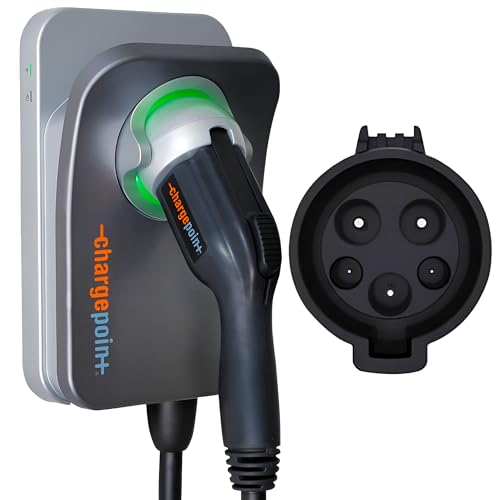
A hardwired J1772 kit with output adjustable up to 50 amps and a 23-foot cable, for a garage that can take a higher-amp circuit.
If your garage can support a larger circuit, a hardwired charger removes the plug-in limit. The Home Flex kit on Amazon is hardwired, with up to 50 amps and 12 kilowatts, a 23-foot cable, a Type 3R enclosure, UL and cUL listing and ENERGY STAR certification, according to ChargePoint. The app lets you lower the output to match the circuit your electrician installs. ChargePoint also says its datasheet recommends a non-GFCI breaker for hardwired installations because an external GFCI breaker can conflict with the charger’s internal ground-fault protection, which is a detail for the installer. See the ChargePoint Home Flex profile.
Autel MaxiCharger Home 50A: Hardwired With Ethernet
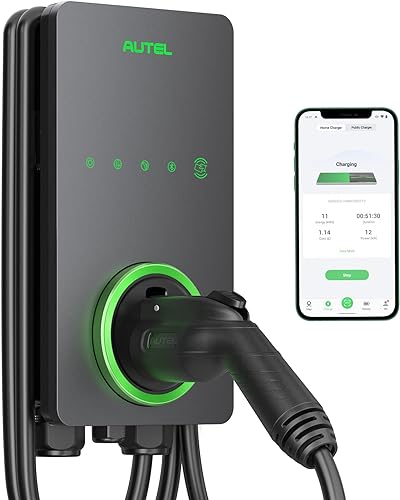
A hardwired 50-amp J1772 charger with a 25-foot cable and Ethernet as well as Wi-Fi, for a garage with a weak signal.
Autel’s 50-amp charger lists Wi-Fi, Bluetooth and Ethernet, which helps in a detached garage where the router is far away. According to Autel, it is hardwired with a 25-foot cable, and the store page says a 70-amp circuit is required for full output. The store page states CSA certification and ENERGY STAR. Read the Autel MaxiCharger Home 50A profile for the enclosure-rating discrepancy.
Cable Reach and Cable Management
Cables on these chargers run from 23 feet on the ChargePoint to 25 feet on the Emporia, Leviton and Autel units, with the Grizzl-E at 24 feet in its manual. Measure from the wall to the charge port with the car parked as you really park it, and remember that port position differs between cars. A holster or hook for the cable keeps it off the floor, where wheels and snow shovels can damage it. For Tesla owners, our Tesla charger guide covers the connector question, and the two-car guide covers two vehicles.
Listings, ENERGY STAR and Rebates
Look for a listing to UL 2594, the standard UL Solutions names for electric vehicle supply equipment, and for ENERGY STAR certification where the maker states it. Check the mark on the exact model, and ask your electrician and local inspector what they accept. Per the IRS, the federal section 30C credit no longer applies to charging equipment placed in service after June 30, 2026. Check your utility for local rebates.
Sources
- Emporia EV Charger product page, Emporia
- Emporia EMEVSE1 ENERGY STAR certification record
- EV40P 40 Amp Level 2 EV charging station, Leviton
- Grizzl-E Classic 40A, United Chargers
- Grizzl-E Classic user manual and installation guide, version 3.5
- ENERGY STAR certified listing, Grizzl-E Classic GR1-14-24-PB
- ChargePoint Home Flex specifications and ordering information, ChargePoint
- AC Elite Home 50A EV Charger, Autel Energy store
- MaxiCharger AC Elite Home 50A with in-body holster, Autel Energy
- Charging at home, US Department of Energy Alternative Fuels Data Center
- Getting started with home EV charging, EPA
- Charging an electric vehicle, fueleconomy.gov
- Level 2 charger installation, San Diego County EV consumer guide
- Electric vehicle chargers, UL Solutions
- Alternative Fuel Vehicle Refueling Property Credit, IRS
Frequently asked questions
Should I choose a plug-in or a hardwired garage charger?
It depends on the circuit. Plug-in chargers on a NEMA 14-50 outlet are limited by their makers to about 40 amps, while chargers rated 48 amps or higher are usually hardwired, according to the EPA. Plug-in models are easier to swap or take with you. Either way, a licensed electrician should do the installation.
Can I use my dryer outlet for an EV charger?
We cannot say that for your home. Whether an existing 240-volt circuit, including a dryer or range circuit, can serve a charger is a decision for a licensed electrician who can inspect the wiring, the breaker and the other loads. Never use a splitter or an adapter to share a circuit between an appliance and a charger.
Do I need a permit to install a garage charger?
Often yes. The Department of Energy says permits may be required, and the EPA says an electrician typically handles permits and inspections. San Diego County says a Level 2 charger there needs a building permit, an inspection before use and a licensed contractor. Ask your local building department.
Can an EV charger be used outdoors or in the rain?
Chargers rated for outdoor use are designed for it. The EPA suggests choosing a model rated to withstand rain and the elements for outside installation, and fueleconomy.gov says vehicles and charging stations are designed to prevent electrical shock, even in rain. Check the enclosure rating the maker lists for your exact model.
How long a cable do I need?
Measure from the wall location to the charge port with the car parked as it usually is. The chargers here list cables from 23 to 25 feet, according to their makers. Charge port position varies by car, so a rear-corner port may need more reach than a front one.
What marks should I look for on a charger?
Look for a listing to UL 2594, the standard UL Solutions names for EV supply equipment, and for ENERGY STAR certification where the maker states it. Check the mark on the exact model you receive, and ask your electrician and local inspector what they accept.